




Sex Doll Wig Care
Prepare Before You Move: Proper Preparation Matters
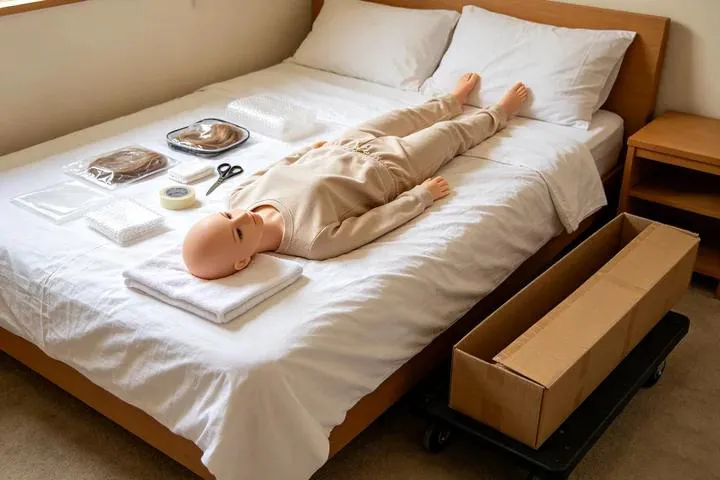
Before lifting or transporting your doll, take a few minutes to prepare it properly.
1. Remove Accessories Whenever Possible
Remove wigs, jewelry, eye accessories, and other detachable items before moving the doll. Pack these items separately.
This helps:
- Prevent accessories from falling off, bending, or breaking during transport.
- Reduce the number of protruding parts that can catch on furniture, walls, or packaging.
If your doll has a manufacturer-approved detachable head, you may remove it according to the product's instructions.
Wrap the head separately using soft, non-abrasive material, and protect threaded connections and other hardware from direct contact with hard surfaces.
Never force a component apart simply to reduce weight. If you are unsure whether a part is designed to be removed, check the manufacturer's instructions first.
How to Wrap a TPE or Silicone Sex Doll
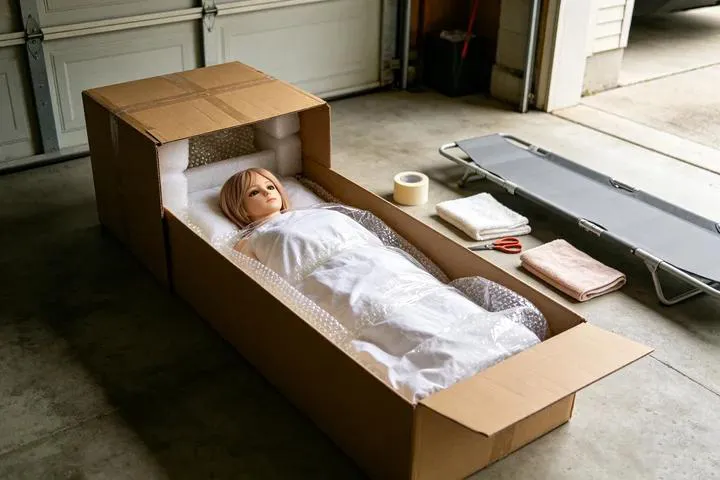
Good wrapping is not simply about adding as much padding as possible. The goal is to provide:
protection from friction, protection from color transfer, and cushioning without creating excessive pressure on specific areas.
Start With a Clean, Light-Colored Fabric
A clean white or light-colored cotton sheet can be used as the first protective layer.
Light-colored fabric is preferable because it reduces the risk of dye transfer that can occur when certain dark-colored fabrics remain in prolonged contact with soft TPE surfaces.
This is particularly important for TPE dolls, which can be more susceptible to staining and surface discoloration.
Avoid placing rough fabrics, dark blankets, or materials that may bleed color directly against the doll's skin.
Add Extra Protection to High-Contact Areas
Consider adding soft padding around areas that are more likely to contact the floor, box, or other objects, such as:
- Fingers
- Wrists
- Elbows
- Knees
- Heels
- Toes
- Shoulders
- Other protruding areas
Soft towels, polyethylene foam, or other suitable cushioning materials can be used.
The purpose of this padding is to prevent repeated impacts and localized pressure, not to tightly compress the doll.
The Most Important Handling Principle: Distribute the Weight Evenly
When moving a full-size sex doll, one of the main things to avoid is localized loading.
Recommended Positioning
Whenever practical:
- Keep the body in a natural, supported position.
- Avoid leaving the arms or legs unsupported for extended periods.
- Prevent individual joints from supporting most of the doll's weight.
- Avoid keeping the doll in a seated position for long periods.
- Never lift the entire doll by the wrists, ankles, neck, or other small connection points.
- Use a supported, horizontal position whenever practical.
When two or more people are moving the doll, one person should coordinate the movement so everyone lifts, turns, and sets the doll down at the same time.
Soft Does Not Mean Foldable
TPE and silicone can be flexible, but flexibility does not mean that the doll should be aggressively folded.
Depending on the design, full-size dolls may contain internal skeletons, joints, metal components, or other structural parts.
Therefore:
Flexible does not mean suitable for prolonged folding.
Do not force the body into an extreme position simply to fit it through a narrow space or container.
Moving a Doll Indoors: A Flat-Platform Dolly Is Usually Easier Than Carrying
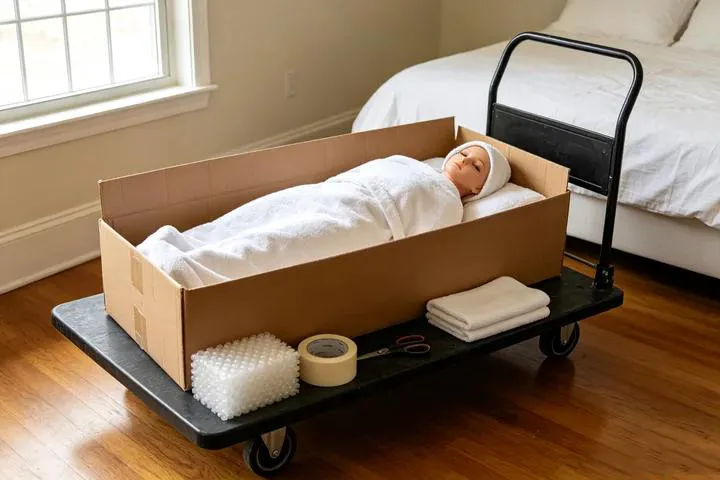
If you only need to move a doll between rooms, a garage, or another nearby indoor location, you usually do not need to carry the entire weight manually.
Recommended Option: A Four-Wheel Flat Platform Dolly
A sturdy, wide platform dolly can make indoor movement considerably easier when its rated capacity is appropriate for the doll's weight.
Step-by-Step
Step 1: Cover the platform with a clean, soft, light-colored protective layer.
Step 2: Place the wrapped doll horizontally in the center of the platform.
Step 3: Make sure the body is evenly supported rather than resting heavily on the head, heels, hips, or another single area.
Step 4: Use a wide, soft strap to prevent the doll from shifting.
The strap should stabilize the doll rather than tightly compress the body.
Step 5: Move slowly, especially when crossing thresholds, carpet transitions, doorways, or uneven flooring.
Furniture Sliders: Useful for Short, Flat-Surface Moves
Furniture sliders can be useful when you only need to reposition a wrapped doll a short distance across a smooth, level floor.
A basic approach is:
- Wrap the doll in a protective layer.
- Position the sliders under appropriate load-bearing areas.
- Move the doll slowly and horizontally.
- Never drag the doll directly across the floor.
Furniture sliders are intended for level surfaces, not stairs.
If you have hardwood flooring, make sure the sliders are appropriate for the surface and that the contact areas are clean. Small particles trapped underneath can potentially scratch the floor.
Moving a Doll on Residential Stairs Requires a Different Approach
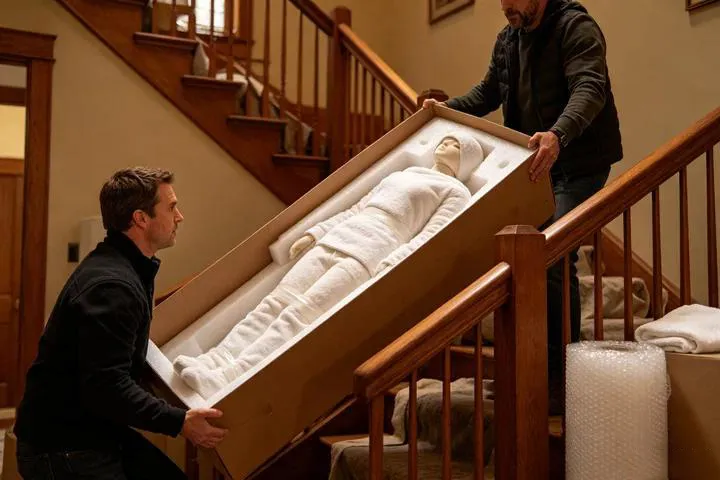
Stairs are usually the most challenging part of moving a full-size sex doll.
Typical U.S. homes may have hardwood or carpeted stairs, narrow landings, handrails, walls, door frames, and tight turns. These conditions create risks not only for the doll but also for the people carrying it and the property itself.
For this reason, do not simply try to push a standard flat dolly up a residential staircase.
Moving a Full-Size Sex Doll From the First Floor to the Second
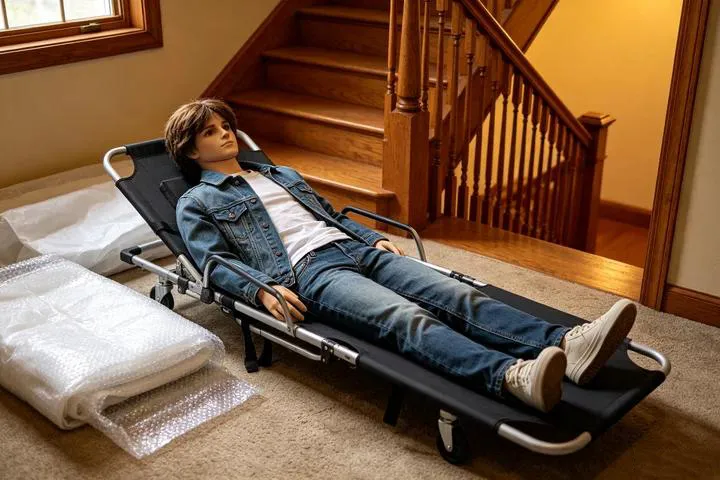
If your full-size sex doll features a manufacturer-approved detachable head design, consider removing the head before moving the doll upstairs and transporting the head and body separately.
The goal is not to disassemble the doll as much as possible. Instead, separating the head and body can reduce the weight of each load, shorten the overall length, and make the body easier to support and control during transport.
Important: Only remove the head if the product is specifically designed for this type of disassembly. Never force the head or any other component to detach simply to reduce the weight.
Recommended Moving Process
Step 1: Disassemble and Pack the Doll on the First Floor
Choose a clean, spacious area with no obstacles. Follow the manufacturer's instructions to remove the head, then protect and package the head and body separately.
Step 2: Protect the Head Separately
Wrap the head in clean, soft, non-abrasive material that will not transfer color. Pay particular attention to protecting the eyes, face, and head connection point, and keep them away from hard or sharp objects.
Step 3: Place the Body on Suitable Moving Equipment
Use a properly load-rated soft stretcher or other equipment specifically suitable for stair transport. Make sure the doll's body is evenly and securely supported in a horizontal position.
If the body needs to be moved across the first floor before reaching the stairs, a suitable platform dolly can be used for flat-surface movement. A standard platform dolly should not be used directly on residential stairs.
Step 4: Have at Least Two Adults Work Together
Depending on the doll's weight, stair width, and the design of the moving equipment, have two or more adults work together to handle the move.
Before starting, agree on each person's position, the direction of movement, and where the doll will be placed.
Step 5: Move Slowly and Maintain Stability on the Stairs
Keep the doll's body as level as practical while controlling its center of gravity according to the staircase and moving equipment.
When approaching a turn, narrow section, or change in direction, communicate in advance and move together.
Do not rush the process by suddenly lifting, lowering, or changing direction.
Step 6: Reassemble the Doll After Reaching the Second Floor
Once you have reached the destination room, place the body on a clean, stable surface. Then reinstall the head according to the manufacturer's instructions.
Why Is Split Transport Better for Detachable-Head Models?
When the product is specifically designed for safe head removal, transporting the doll in separate sections can make the move more manageable by:
- Reducing the weight of each individual load
- Shortening the overall length of the body
- Reducing the space needed to navigate stair turns
- Making it easier to control the head and neck area during handling
However, a detachable head does not mean that the doll can be handled without regard to its structural limitations. Connection systems, weight distribution, and internal skeleton designs can vary significantly between brands and models. Always follow the specific manufacturer's instructions for disassembly, handling, and reassembly.
What If the Head Cannot Be Removed?
For dolls with a fixed head, consider using a properly rated soft stretcher or other purpose-built carrying equipment.
Before using any equipment, check:
- Maximum load capacity
- Overall dimensions
- Number and placement of carrying straps
- Handle design
- Suitability for stair use
- Whether two or more people are required
Recommended Handling Method
Place the wrapped doll horizontally on the stretcher and secure it without excessive compression.
Two adults should coordinate the movement, keeping the load stable and moving slowly.
The key principle is:
Slow, controlled, and synchronized.
Do not rush simply to get the job finished.
Measure the Route Before You Start
If the staircase is narrow or has tight turns, measure:
- The doll's overall length
- The carrying equipment's width
- Stair width
- Landing and turning space
- Doorway width
A few minutes of measuring can prevent a difficult situation halfway up the stairs.
Protect Hardwood Stairs, Walls, and Rental Properties
If you live in a rental home or apartment, protect the route before moving a heavy object through it.
Pay particular attention to:
- Stair handrails
- Wall corners
- Door frames
- Hardwood floors
- Stair edges
- Tight turns
Moving blankets, furniture pads, and similar protective materials can help prevent accidental contact with walls and furniture.
However, make sure all protective materials are secured properly and do not create a tripping hazard.
If the staircase is particularly narrow, steep, or difficult to navigate, or if the doll is too heavy for you to control safely, do not attempt a solo lift simply to avoid getting help.
Consider using appropriate professional moving assistance and confirm in advance that the service is willing to handle this type of item.
Handling Methods to Avoid
The following practices are particularly risky:
❌ Carrying a Full-Size Doll Upright Up or Down Stairs
A high center of gravity can make the load difficult to control and may obstruct the carrier's view.
❌ Lifting the Entire Doll by the Wrists, Ankles, or Neck
Small connection points should not be expected to support the full weight of the doll.
❌ Leaving the Doll in a Seated Position for Extended Periods
A seated position can place prolonged localized pressure on the hips and other areas.
❌ Forcing the Body Into a Folded Position
Do not aggressively bend the doll simply to fit through a narrow doorway or storage space.
❌ Dragging the Doll Across Floors or Stairs
Dragging can create unnecessary surface friction and may place additional stress on internal components.
❌ Using Equipment With an Unknown Load Rating
Any dolly, stretcher, or lifting equipment should have a rated capacity appropriate for the actual load, with sufficient margin for movement, stopping, and turning.
Road Trips in the U.S.: Focus on Secure Packaging, Stability, and Temperature
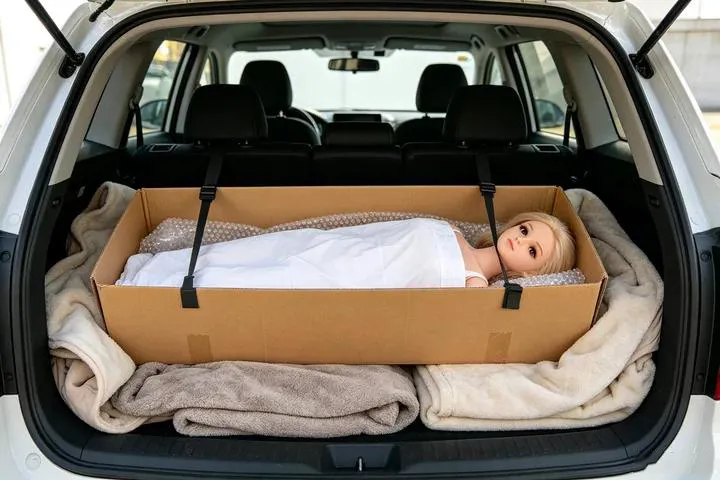
If you are driving with a full-size sex doll, treat it as a large, delicate item rather than as a passenger.
Recommended Approach: Package It and Secure It in the Rear of the Vehicle
Depending on your vehicle, a wardrobe box, heavy-duty moving box, or another appropriately sized container may work well.
Recommended Packing Sequence
1. Remove detachable accessories
Pack wigs, jewelry, and other delicate components separately.
2. Add a protective inner layer
Wrap the body in a clean, light-colored soft fabric.
3. Protect protruding areas
Add cushioning around fingers, heels, joints, and other vulnerable areas.
4. Place the doll inside the container
Make sure the body is supported without being tightly compressed against the box.
5. Fill excessive empty space
Use soft cushioning material to reduce movement during driving.
6. Close and secure the container
A simple "Fragile" or "Handle With Care" label may be useful, but there is generally no need to put sensitive personal information on the outside.
How Should the Box Be Positioned in the Vehicle?
The primary goals are stability and safe vehicle operation.
If the vehicle allows, folding the rear seats down can provide a larger horizontal loading area.
Secure the box firmly to prevent it from opening during transport:
- Slide forward during hard braking
- Shift sideways while turning
- Tip over
- Strike other objects inside the vehicle
Soft luggage or other suitable items can sometimes be used around the container to limit movement.
At the same time, make sure the load:
- Does not obstruct the driver's view
- Does not interfere with safety equipment
- Does not interfere with vehicle controls
- Does not create an unsafe condition for other occupants
Pay Special Attention to Heat During Summer Road Trips

TPE and some other doll materials can be sensitive to elevated temperatures.
A closed vehicle can become extremely hot when parked in direct sunlight, even when the outdoor temperature does not seem extreme.
Extended exposure to excessive heat may increase the risk of:
- Softening
- Surface tackiness
- Deformation
- Pressure-related marks
- Other material changes
For this reason, avoid leaving a TPE or silicone doll in a hot, enclosed vehicle for extended periods.
During long-distance travel, plan stops carefully and avoid unnecessary exposure to direct sunlight and extreme heat.
The appropriate precautions depend on the doll's material, construction, packaging, outdoor conditions, and the manufacturer's storage recommendations.
Hotels and Shared Areas: Protect Privacy and Follow Property Rules
When moving from a parking area into a hotel room, through an apartment hallway, or across another shared space, the simplest approach is to keep the product fully enclosed and packaged.
Recommended practices include:
- Complete the packaging before entering shared areas.
- Use an opaque container or covering.
- Do not open the package in hallways, parking areas, elevators, or other shared spaces.
- Open the package only after reaching an appropriate private area.
- Follow the hotel's, property's, or facility's rules.
It is important not to assume that one specific legal rule applies identically throughout the United States.
Public-order laws and property policies can vary by jurisdiction and location. If you are unsure about a specific property or local requirement, check the applicable rules or ask the property management directly.
If You Rent Your Home, Protect the Property Before You Start
Renters have an additional reason to plan the route carefully.
Before moving the doll, inspect:
- Wall corners
- Staircases
- Hardwood floors
- Door frames
- Narrow hallways
- Shared areas
- Potential contact points
For expensive or easily damaged interiors, consider taking a few photos of the route before moving a heavy item.
This can help you identify any pre-existing damage and verify the condition of the property after the move.
After Moving: Inspect the Doll Before Putting It Back Into Regular Use
Once the doll reaches its destination, place it on a clean, stable surface and allow it to return to a natural supported position.
Inspect areas that may have experienced pressure or contact, including:
- Hips
- Shoulders
- Heels
- Fingers
- Knees
- Joints
- Neck and head connection areas
If you notice a minor temporary pressure mark, allow the material to rest in a natural position and observe whether it gradually recovers.
Avoid immediately trying to remove a mark by aggressively rubbing, pulling, or applying heat.
If you notice tearing, cracking, unusual joint movement, structural damage, or persistent deformation, stop manipulating the affected area and consult the manufacturer's care or service guidance.
Practical Moving Equipment Checklist
| Equipment | Best Use | Important Considerations |
|---|---|---|
| White or light-colored cotton sheet | First protective layer | Keep clean and dry |
| Soft foam or cushioning material | Protecting joints and protruding areas | Avoid excessive compression |
| Wide, soft straps | Stabilizing the doll | Do not overtighten |
| Four-wheel platform dolly | Indoor flat-surface movement | Check the load rating |
| Furniture sliders | Short moves on level floors | Not suitable for stairs |
| Soft carrying stretcher | Stair transport | Verify capacity and dimensions |
| Heavy-duty moving box | Road trips and relocation | Do not place heavy objects on top |
| Moving blankets/furniture pads | Protecting walls and furniture | Secure them to avoid tripping hazards |
Which Method Should You Use?
If you want a quick reference, use the following guide:
| Situation | Recommended Approach | Avoid |
|---|---|---|
| Short indoor movement | Platform dolly | Long-distance manual carrying |
| Short repositioning on a flat floor | Furniture sliders | Direct dragging |
| First floor to second floor | Coordinated two-person handling | Solo lifting beyond your ability |
| Detachable-head model | Manufacturer-approved separation | Forced disassembly |
| Fixed-head model | Properly rated carrying stretcher | Improvised stair equipment |
| Road trip | Enclosed, securely stabilized packaging | Exposed placement |
| Hotel/shared areas | Keep the package closed | Opening the package in shared spaces |
| Hot-weather travel | Minimize heat exposure | Extended storage in a hot vehicle |
FAQ: Common Questions About Moving a Full-Size Sex Doll
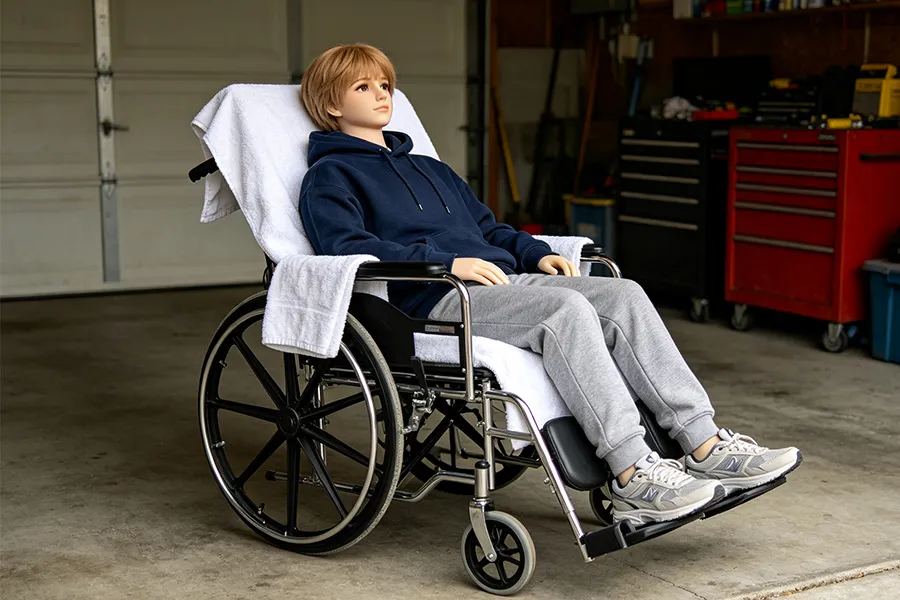
1. Can I use a wheelchair to move a full-size sex doll?
A suitable wheelchair may be useful for short-distance movement on a private, level surface if its weight capacity is adequate and the doll can be securely supported.
A standard wheelchair should not be treated as a stair-climbing device.
2. Can I transport a sex doll in a seated position inside my car?
For longer trips, a properly supported horizontal position is generally preferable when the doll's design and vehicle space allow it.
The priority should be preventing prolonged localized pressure while keeping the load securely positioned and ensuring that it does not interfere with vehicle safety.
3. Can I wrap a TPE doll in a dark-colored blanket?
For direct contact with TPE, a clean, light-colored fabric is generally preferable because it reduces the risk of color transfer.
If a darker blanket is used as an outer layer, it should ideally be separated from the TPE surface by an appropriate protective layer.
4. Can one person carry a full-size doll upstairs?
It depends on the doll's weight, your physical ability, the staircase layout, and the equipment available.
If you need significant effort to control the load or safely negotiate turns, do not force a solo lift simply to save time or avoid asking for help.
Two-person handling can make it much easier to control the center of gravity and direction.
5. What should I do if the doll develops pressure marks after transport?
First, place the doll in a natural, supported position and allow the material time to recover.
Do not immediately try to fix the area by aggressively rubbing, stretching, or heating it.
If the mark remains or is accompanied by cracking, tearing, abnormal joint movement, or other structural changes, contact the manufacturer or qualified after-sales support for guidance.
6. Are there legal considerations when transporting a sex doll in the United States?
Potential considerations can include local public-order requirements, rental agreements, property rules, hotel policies, and vehicle-safety requirements.
It is not appropriate to assume that one specific rule applies uniformly across every state or municipality.
When moving through shared or public areas, keeping the product fully enclosed and following the applicable property and local requirements is a practical approach.
Final Takeaway: Safe Transport Is About Proper Support, Not Brute Force
Moving a full-size sex doll safely is less about finding the strongest way to carry it and more about choosing the right method for the environment.
Flat indoor surfaces → Use a platform dolly or furniture sliders.
Residential stairs → Use coordinated two-person handling and appropriate support equipment; consider manufacturer-approved separation when available.
Road trips → Use protective packaging, secure the load, and minimize heat exposure.
Hotels and shared areas → Keep the product enclosed and follow property rules.
Throughout the process → Avoid dragging, localized lifting, prolonged sitting, extreme bending, and excessive compression.
With a little preparation—measuring the route, selecting properly rated equipment, protecting vulnerable areas, and maintaining balanced support—you can significantly reduce unnecessary stress on the doll, your home, and your own body during transport.